>>
30-MINUTE MEALS! Get the email series now →


A festive whole salmon roasted with a glossy pomegranate orange glaze, finished with jewel-like arils and bright citrus—perfect for holiday gatherings and family feasts.
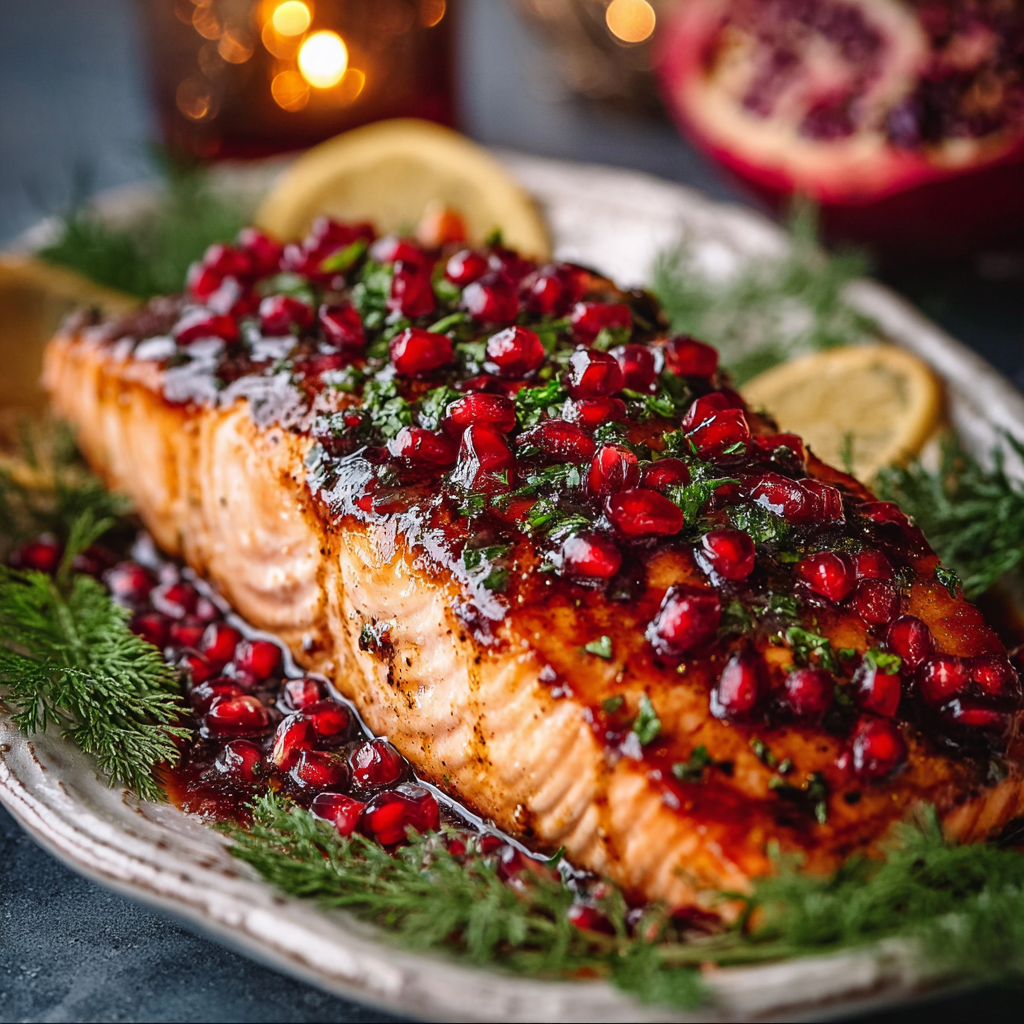
This Christmas salmon with pomegranate glaze is the centerpiece I reach for when I want something that looks celebratory but is simple enough to prepare with kids at my feet. I first made this dish during a holiday potluck when fresh pomegranate arils were in season and I wanted a showstopping fish that didn’t require filleting or fuss. The whole Atlantic salmon bakes into tender, moist flakes while the sticky, sweet-tart glaze caramelizes across the top, adding both shine and bite. Every holiday since, this recipe has become our alternative to heavy roasts—lighter, brighter, and always the first dish to disappear.
What makes this preparation special is the contrast of textures and flavors: the salmon’s rich, oily flesh, the glossy pomegranate reduction with a hint of brown sugar sweetness, and a whisper of orange and zest that lifts the finish. Serving a whole fish invites conversation and warmth, and the colorful garnish of pomegranate seeds, orange slices, and green parsley turns a humble dinner into a festive table. Whether you’re feeding family, entertaining friends, or simply treating yourself, this preparation feels intentional without being intimidating.
In our house the first time I served this, my usually picky nephew asked for a second helping—twice—and my sister asked for the glaze recipe on the spot. I discovered small tweaks that improved the balance: a tablespoon of orange zest brightens the sauce, and a light sprinkling of kosher salt before roasting draws out the salmon’s natural flavors without drying it. These small discoveries made the dish a repeat star at holiday tables.
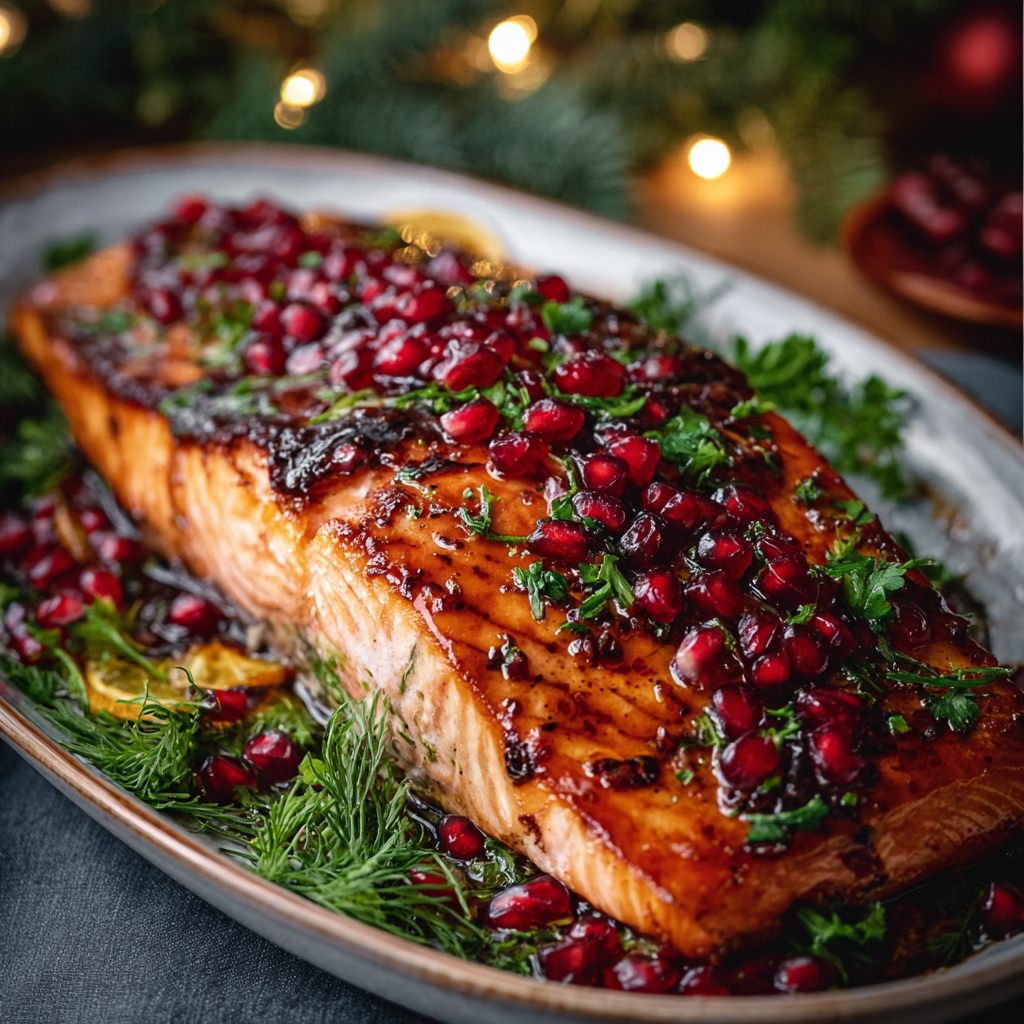
My favorite part about this dish is how the final garnish turns a simple roasted fish into the holiday centerpiece. I remember placing bright orange slices and glistening pomegranate seeds around the platter while my father lit the candles at the table; the color and aroma made everyone pause. Over time I learned to prepare the glaze in the afternoon and reserve the last brush of warm glaze just before serving for maximum shine.
Store leftover salmon in an airtight container in the refrigerator for up to 3 days. Remove the pomegranate seeds if they were added to prevent sogginess; store seeds separately in a small container to maintain their crunch. To reheat, warm gently in a 300 degrees F oven for 8 to 12 minutes, or microwave on medium power in short bursts, basting with reserved glaze to refresh the surface. For long term storage, freeze baked portions without fresh garnishes. Wrap tightly in plastic and foil or vacuum seal, then freeze for up to 3 months. Thaw overnight in the refrigerator and reheat gently to preserve texture.
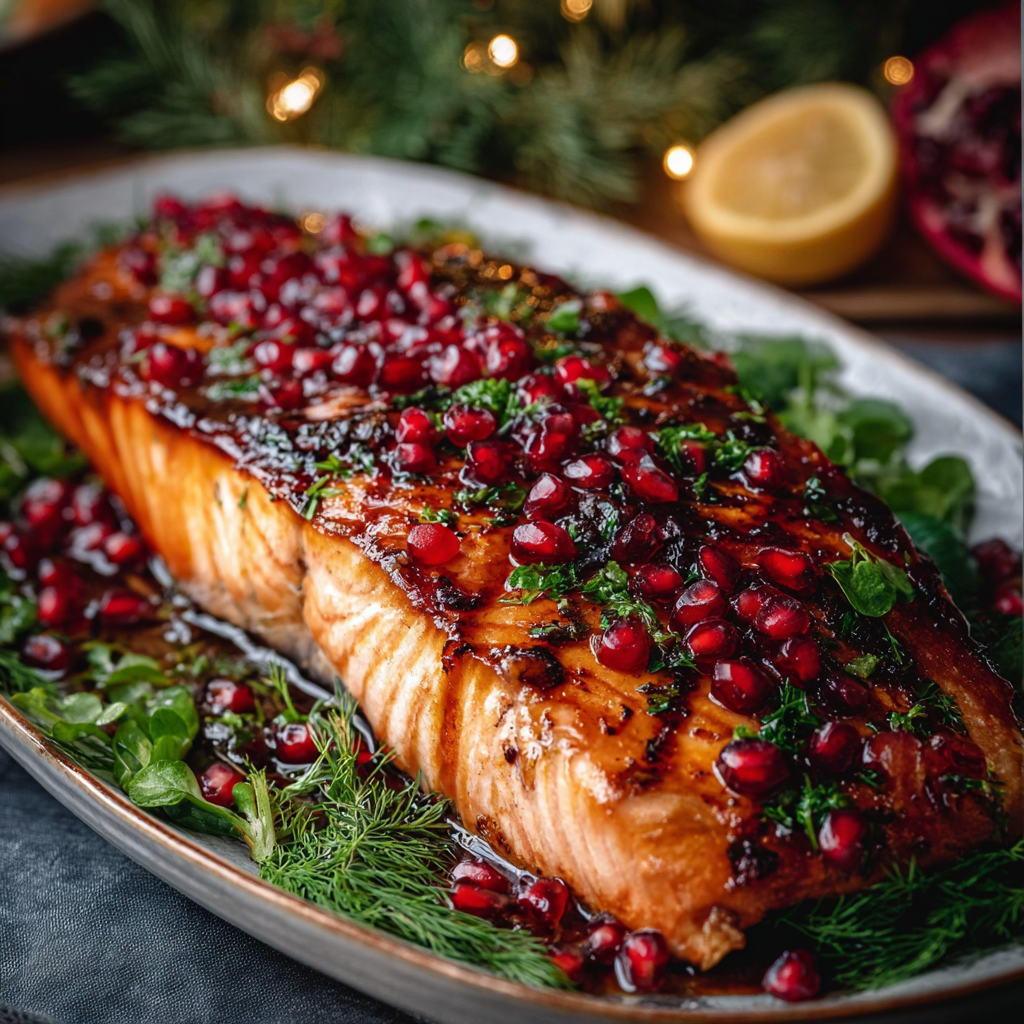
If pomegranate juice is unavailable, substitute with an equal amount of cranberry juice mixed with a tablespoon of lemon juice for tartness; expect a slightly different flavor profile. Brown sugar can be replaced with maple syrup at a 1:1 ratio, but reduce other liquids slightly to maintain glaze thickness. If you prefer a milder citrus note, swap orange juice for tangerine juice or use 1/2 tablespoon of finely grated lemon zest plus the orange juice. For a spicier finish, stir in a pinch of red pepper flakes as the glaze simmers; this adds warmth without overpowering the fish.
This salmon pairs beautifully with simple sides that let the glaze shine: roasted Brussels sprouts with a drizzle of olive oil, creamy mashed potatoes or cauliflower mash, and a bright winter citrus salad. For grains, serve with herbed couscous or a pearl barley pilaf studded with toasted almonds. Garnish with extra pomegranate seeds and thinly sliced green onions for a contrast of texture and color. For festive occasions, serve alongside warm crusty bread and a light white wine such as Sauvignon Blanc or a citrusy Riesling to complement the glaze.
Roasted fish with fruit-based glazes is a tradition found in several coastal cuisines where combining sweet fruit with savory seafood highlights local harvests. Pomegranate in particular has a long culinary history across Mediterranean and Middle Eastern cooking, prized for its bright acidity and jewel-like seeds. Combining pomegranate with orange is a modern interpretation that borrows from holiday citrus pairings traditionally used in winter celebrations. Serving a whole fish is a symbolic gesture in many cultures representing abundance and togetherness, making this preparation especially appropriate for holiday tables.
In winter use fresh pomegranate arils and the brightest oranges you can find. In late summer you could swap the pomegranate for fresh raspberries reduced with a touch of balsamic for a different but equally stunning glaze. For a spring celebration try a glaze with fresh squeezed blood orange juice if available; it gives a deeper color and slightly floral notes. Adjust the sugar to taste in warmer seasons when fruit may be sweeter naturally. Small technique changes, like a lighter roast time for thin fish, tailor the dish to seasonal produce and occasion.
Readers and guests frequently tell me this feels like a restaurant dish made at home. One memorable holiday my neighbor used this exact glaze on grilled salmon and served it family style; people lingered over the platter and asked for recipe cards. Another time a friend adapted the glaze to seared scallops for a small dinner party and reported identical success. The consensus: the balance of sweet, tart, and citrus is universally appealing and reliably converts menu skeptics into fans.
Prepare the glaze up to 48 hours in advance and refrigerate in a glass jar. Rewarm gently before using and thin with a tablespoon of orange juice if it becomes too thick. You can portion the cooked salmon into meal prep containers, storing the glaze separately to preserve texture; add seeds and herbs just before serving. For weeknight variations, use the glaze on salmon fillets or baked chicken breasts to enjoy the same flavors in smaller, faster preparations.
Bringing this salmon to your table is an invitation to celebrate simple, seasonal flavor with minimal stress. The glaze is forgiving, the presentation is festive, and the method is approachable—perfect for making holiday memories around a warm platter shared with people you love.
Make the glaze up to 48 hours ahead and store in the refrigerator to save time on the day of serving.
Cook the fish to an internal temperature of 125 to 130 degrees F for moist, medium doneness and allow it to rest for 5 minutes before carving.
Reserve a small amount of glaze to brush on the salmon right after it comes out of the oven for maximum shine and flavor.
Remove pomegranate seeds before storing leftovers to prevent the seeds from making the glaze soggy; store them separately.
This nourishing christmas salmon with pomegranate glaze recipe is sure to be a staple in your kitchen. Enjoy every moist, high protein slice — it is perfect for breakfast or as a wholesome snack any time.
This Christmas Salmon with Pomegranate Glaze recipe makes perfectly juicy, tender, and flavorful steak every time! Serve with potatoes and a side salad for an unforgettable dinner in under 30 minutes.
Preheat oven to 400 degrees F. Rinse and pat the whole salmon dry, lightly score the skin, and season with kosher salt and black pepper. Place on a rimmed baking sheet lined with parchment or foil.
In a medium saucepan combine pomegranate juice, brown sugar, orange juice, and orange zest. Bring to a simmer over medium heat, stirring occasionally to dissolve sugar.
Simmer the mixture for 10 to 12 minutes until it thickens enough to coat the back of a spoon. Remove from heat while slightly thinner than final texture since it will thicken as it cools.
Brush or spoon a generous layer of warm glaze over the top of the salmon and inside the cavity before roasting to infuse flavor into the flesh.
Roast the glazed salmon for 18 to 22 minutes, depending on thickness, until the flesh flakes and reaches 125 to 130 degrees F at the thickest point for medium doneness.
After removing from the oven, brush a second light coat of glaze on the fish. Scatter pomegranate seeds, add orange slices, and sprinkle with chopped parsley and green onions. Let rest 5 minutes before carving.
Last Step: Please leave a rating and comment letting us know how you liked this recipe! This helps our business to thrive and continue providing free, high-quality recipes for you.
Leave a comment & rating below or tag
@magicmealideas on social media!
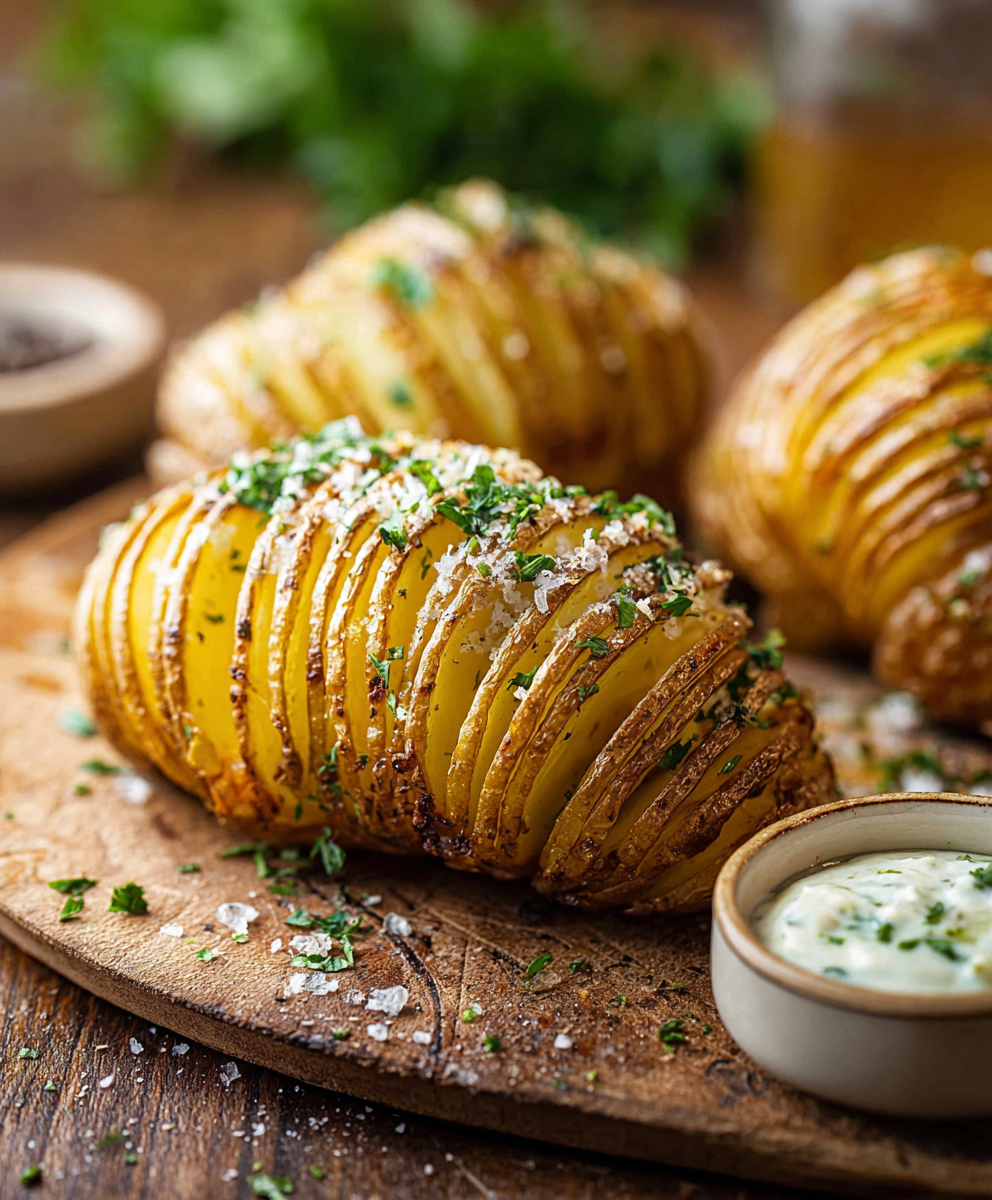
Thinly sliced, butter-brushed russet potatoes baked until the edges crisp and the insides stay tender — a simple side that feels special.
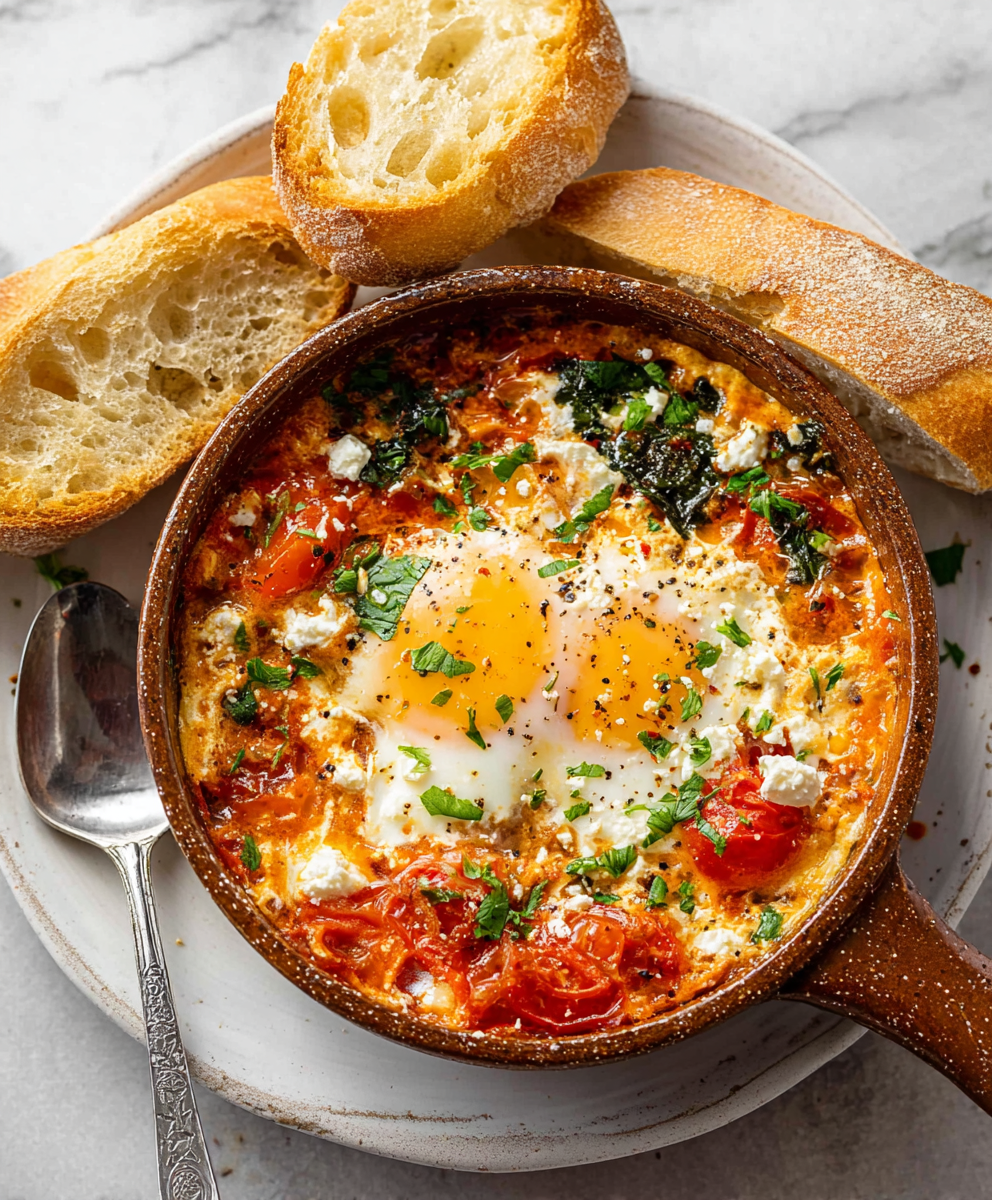
A bright Mediterranean-inspired skillet of blistered tomatoes, roasted feta, tender spinach and baked eggs — perfect for breakfast, brunch or a light dinner.
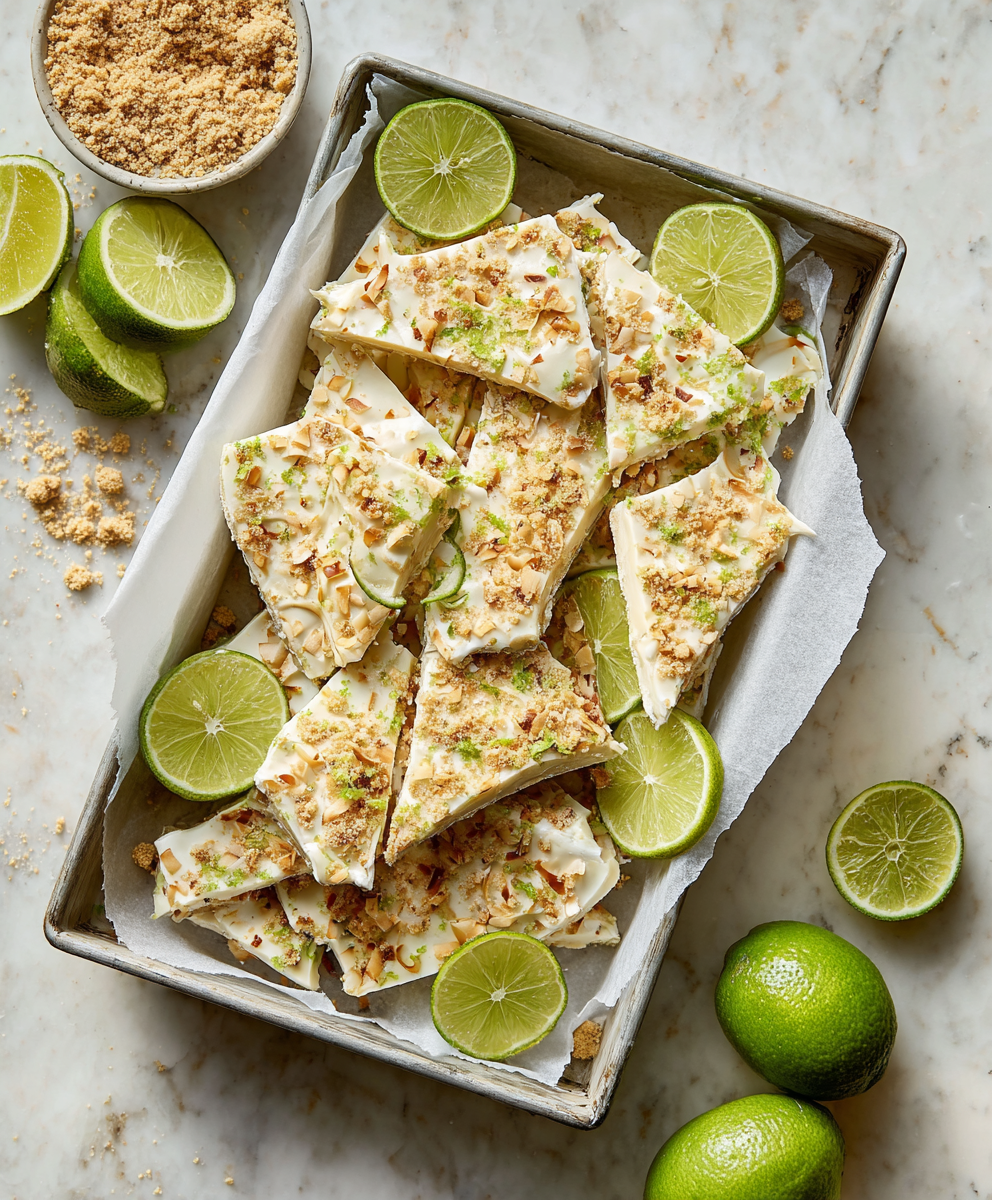
A bright, creamy frozen treat that tastes like key lime pie — made with Greek yogurt, zesty lime, crunchy gluten-free graham crumbs and toasted coconut for a refreshing, protein-packed snack.
Leave a comment & rating below or tag @magicmealideas on social media!
Enjoyed this recipe? Share it with friends and family, and don't forget to leave a review!
This recipe looks amazing! Can't wait to try it.
Comments are stored locally in your browser. Server comments are displayed alongside your local comments.

Join to receive our email series which contains a round-up of some of our quick and easy family favorite recipes.